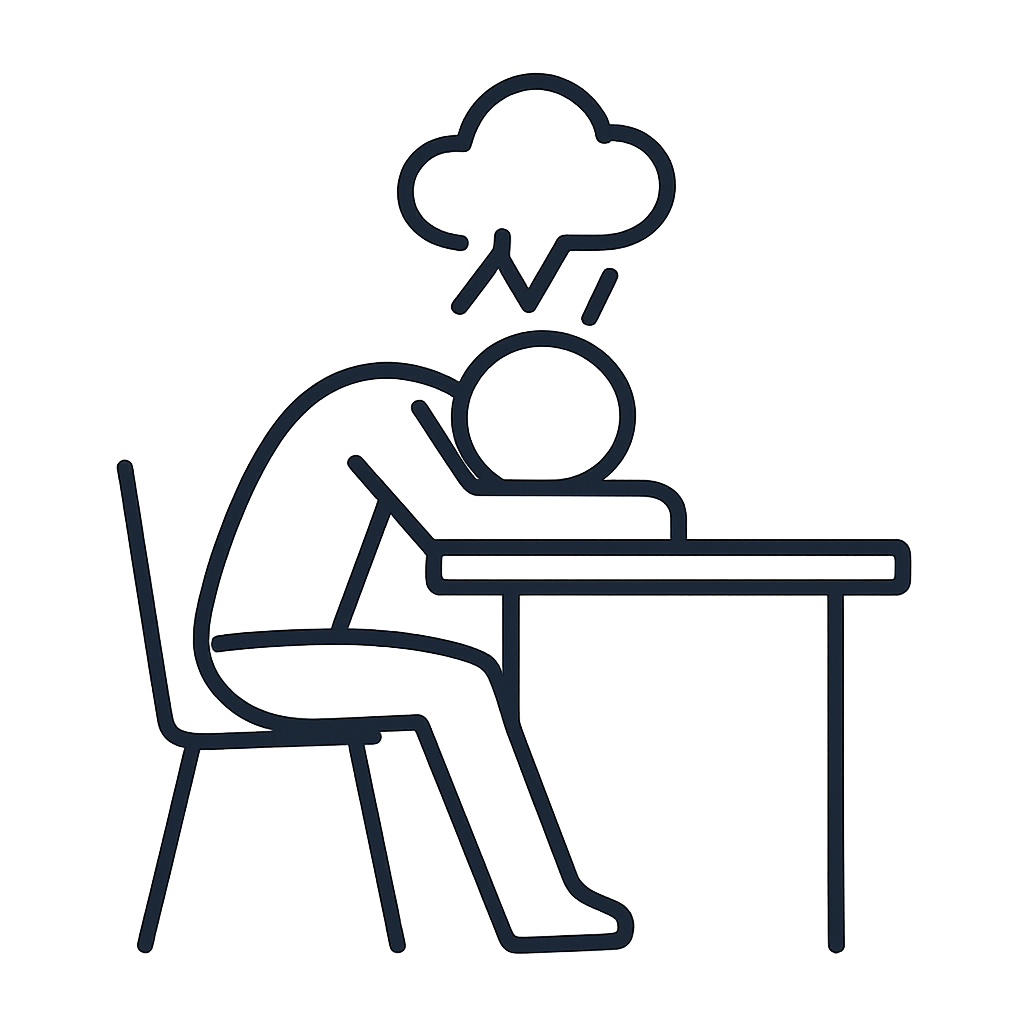
You wake up exhausted. You haven’t even checked your phone yet, and you’re already behind.
Sound familiar?
If you’re an Indian woman — working, managing a home, being a daughter, daughter-in-law, mother, wife, and professional all at once — burnout isn’t a buzzword.
It’s just a Tuesday.
But here’s the thing: Hum ise Burnout nahi kehte , We call it adjustment. We call it responsibility.
We call it “Are yeh toh Sab ko Hota hai thoda seh lo“.
This post isn’t going to tell you to meditate more or take a bubble bath.
It’s going to name the real, structural, deeply Indian reasons why so many of us are running on empty — and why this isn’t a personal failure.
What Is Burnout, Really?
Burnout is not just tiredness. The World Health Organization defines it as chronic stress that has not been successfully managed — leading to emotional exhaustion, detachment, and a reduced sense of personal accomplishment.
The key word is chronic. It’s the result of sustained pressure without adequate rest, recognition, or support. And Indian women? We have that in abundance.
The Factors Nobody Wants to Name
1. The Double Shift Is Actually a Triple Shift
Global research talks about the “double shift” — working women who come home to a second unpaid shift of domestic labour. But Indian women often run a triple shift: paid work, domestic labour, and the invisible emotional management of an entire family ecosystem , kun ki – “Yaar tumhare bina toh is ghar main ek patta bhi nahi hilta.”
Managing everyone’s moods, mediating between generations, keeping the peace between husband and in-laws, tracking every family member’s needs — this is labour.
It has no end time. It is never acknowledged. And it drains the nervous system just as much as any office job.
2. The Joint Family Dream That Became Your Problem
Joint family living is culturally celebrated. And it can be beautiful — shared meals, children growing up with grandparents, built-in community.
But for the bahu or the working daughter who becomes the household’s de facto manager? It’s often an unpaid, boundary-less role that never gets the job description it deserves. You are simultaneously expected to be modern enough to earn and traditional enough to serve. That contradiction is exhausting.
3. You Were Never Taught That “No” Was an Option
Most Indian women grew up in households where compliance was love, and setting limits was selfishness. We were rewarded for being agreeable, for adjusting, for putting others first. So now, as adults, every time we try to protect our time or energy, we feel guilty.
That guilt is not weakness. It is conditioning. And it is a significant driver of burnout — because you keep saying yes long after your body is screaming no.
4. The Career Penalty Is Real
Indian professional women navigate a specific career tax: they are expected to perform at the same level as men at work, while being judged by traditional standards at home. Promotions slow down around marriage and motherhood. Maternity leave is often a career setback in practice, even when it isn’t on paper. Many women quietly scale back their ambitions not because they lack ability, but because no one is scaling back anything at home to make room for their growth.
5. We Don’t Sleep. We Don’t Rest. We Just Pause.
True rest — the kind that actually restores your nervous system — requires psychological safety. It means being able to stop without guilt, without someone needing something, without a mental to-do list running in the background.
Most Indian women have never experienced this. We rest only when we collapse. That’s not recovery — that’s our body forcing a timeout because we won’t take one ourselves.
6. Hormones Are Being Completely Ignored
This one doesn’t get discussed enough. India has one of the highest rates of PCOS in the world — affecting roughly 1 in 5 women. Thyroid disorders, perimenopause, premenstrual dysphoria — these are biological conditions that significantly affect energy, mood, and cognitive function. Yet most working Indian women have never had their hormones properly evaluated, and even fewer have received support for them.
We keep pushing through hormonal crashes and calling it laziness or weakness. It is neither.
7. The Aspirational Trap
There is a specific pressure on today’s urban Indian woman that previous generations didn’t face in the same way: the pressure to be it all and want it all. The Instagram feed that shows the promoted director who also cooks a healthy tiffin for her kids and goes to the gym. The LinkedIn post from the woman who built her startup while raising two children.
These stories are real. They are also not the full picture. Aspiration without structural support is just another form of pressure in disguise.
This Is Not a You Problem
Burnout among Indian women isn’t happening because we’re fragile or incapable. It’s happening because the structures around us — social, professional, familial — were not designed with our wellbeing in mind.
Naming this clearly is the first step. Not to assign blame, but to stop assigning it to ourselves.
In the posts that follow, we’ll get into what burnout actually does to your body (especially your hormones), how to recognise the early signs before you crash, and what real recovery looks like — beyond the generic advice that was probably written for someone else’s life.
If this resonated with you, share it with a woman you know who’s quietly holding too much. She probably doesn’t even know she’s burned out. She just thinks she’s not doing enough.
[Subscribe / Follow for the next post: The Physical Signs of Burnout Indian Women Are Dismissing as Normal]
 Desi & Drained
Leave a comment